Cavite as your next address to call home - Federal Land NRE Global

Cavite as your next address to call home

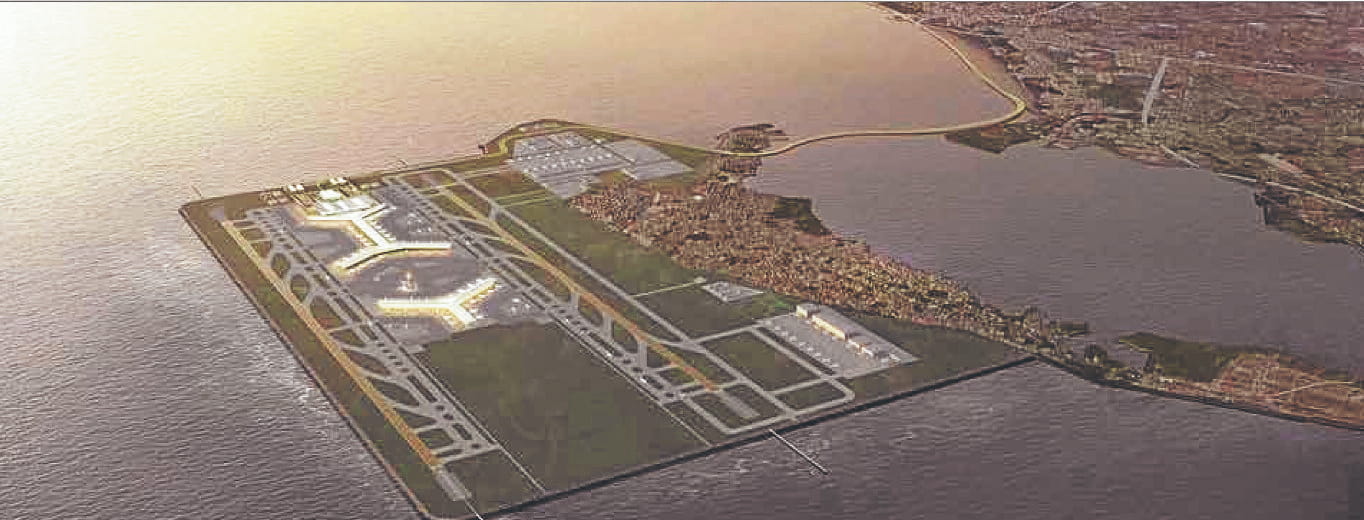
Sangley Point International Airport (Inquirer File Photo)

Cavite is rapidly emerging as one of the country’s leading economic and lifestyle hubs, driven by large scale infrastructure development, expanding industries, and a strong population growth.

Part of the Calabarzon Region, the country’s second largest contributor to economic output, the province stands out as an ideal location for industry, investment, and urban development.
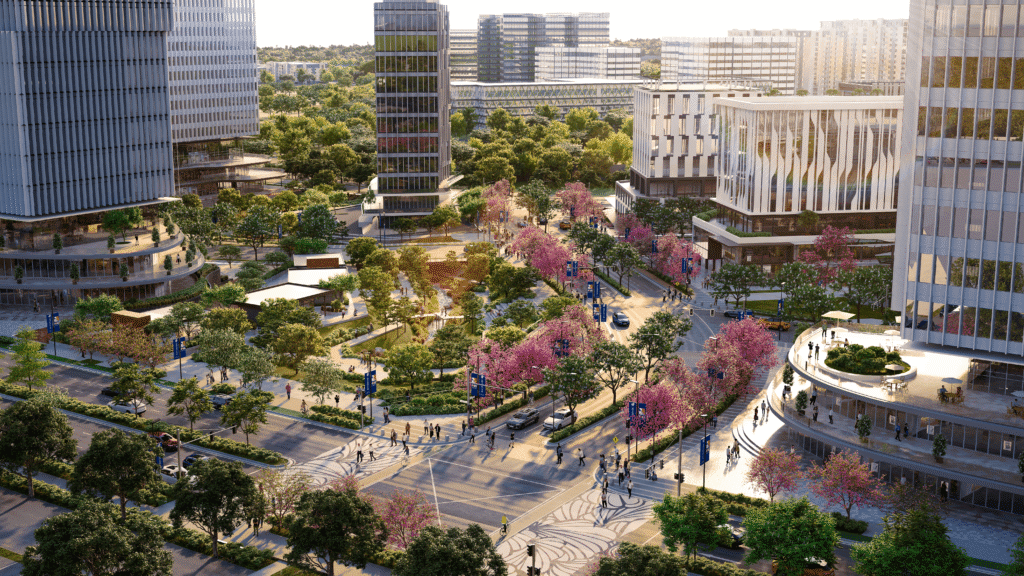
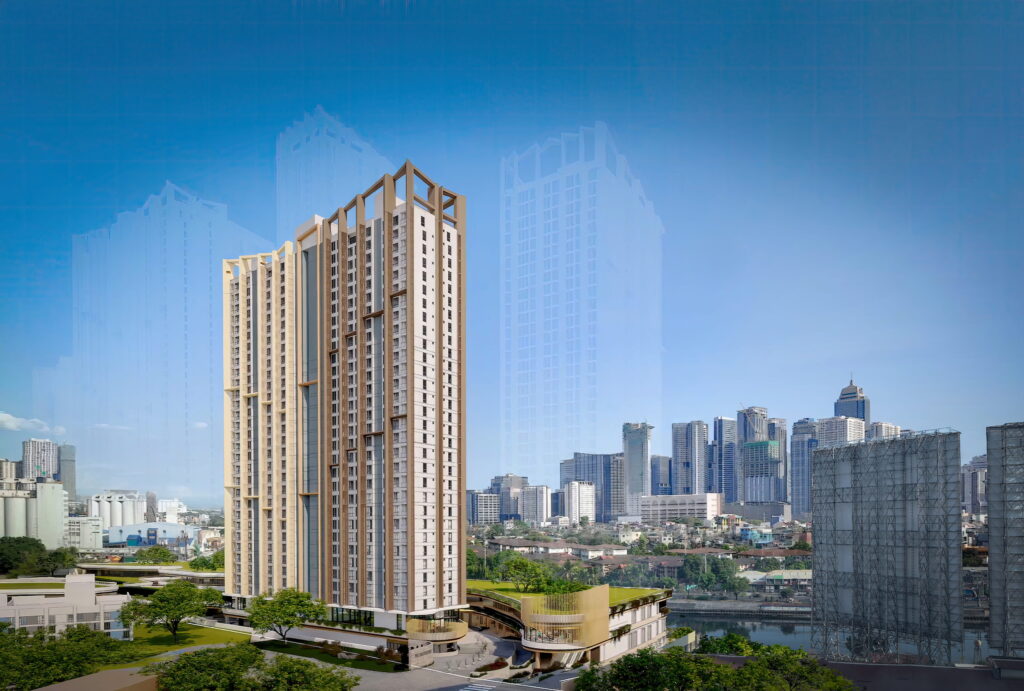
Yume at Riverpark (Inquirer File Photo)

Attractive destination

Benefiting from spillover growth from Metro Manila, Cavite has since evolved into a full-fledged urban center and an increasingly attractive destination even for developers seeking opportunities beyond the capital.

This transformation has been strongly supported by Cavite’s strategic connectivity. Major infrastructure networks such as the South Luzon Expressway (SLEx) and the Manila–Cavite Expressway (Cavitex) link the province to Metro Manila and neighboring provinces, enhancing accessibility for both residents and businesses.

Upcoming infrastructure projects in South Luzon are set to further improve mobility and shorten travel times to key urban hubs. These continued developments reinforce Cavite’s role as a major growth engine in the region, strengthening its long-term appeal as a place to live, work, and invest.
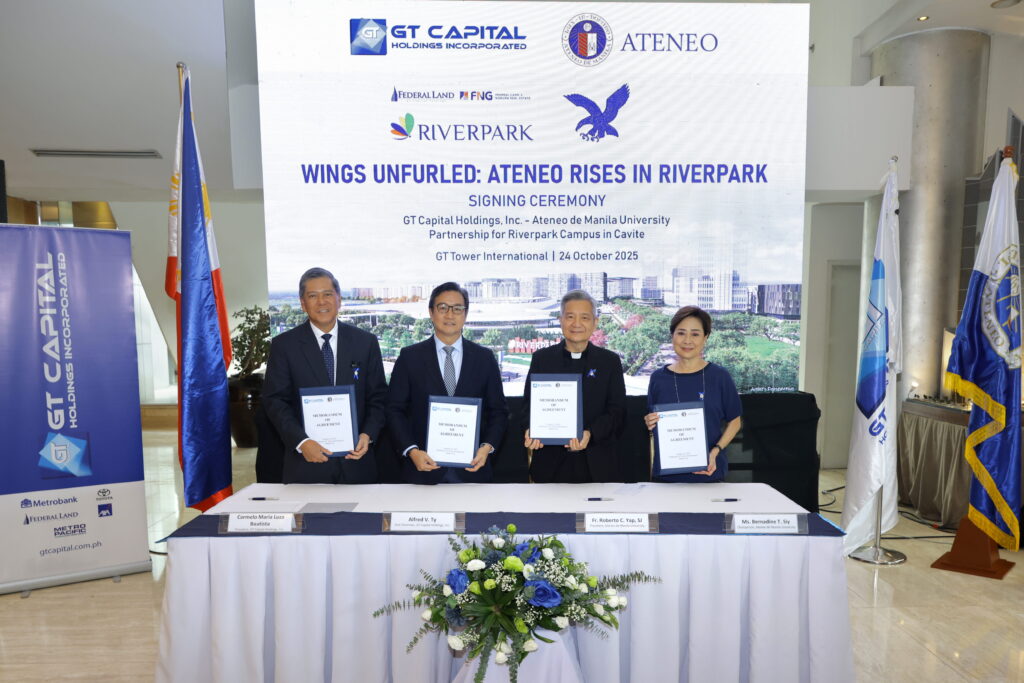
GT Capital Holdings signed an agreement with the Ateneo de Manila Unviersity for the establishment of a new Ateneo campus in Riverpark. (Inquirer File Photo)

Choice of residence

As Cavite progresses, it has also become a top choice of residence. Property projects are seeing strong demand for lots, house-and-lot developments, and even condominium units.

Industrial demand in the province, which is driven by automotive, semiconductor, and packaging firms, continues to flourish as well with recent foreign investments expected to boost warehouse absorption, job creation, and economic growth.

With these developments, Cavite is likewise positioning itself as a major international gateway and business hub, with the Cavite Port Development, including the Sangley Point International Airport, and 116.2-hectare Cavite Economic Productivity Zone.

Renewable energy is also on the rise, with Maragondon Wind Energy Corp. investing P10.58 billion to build a 200-megawatt onshore wind farm to support Luzon’s clean energy transition.
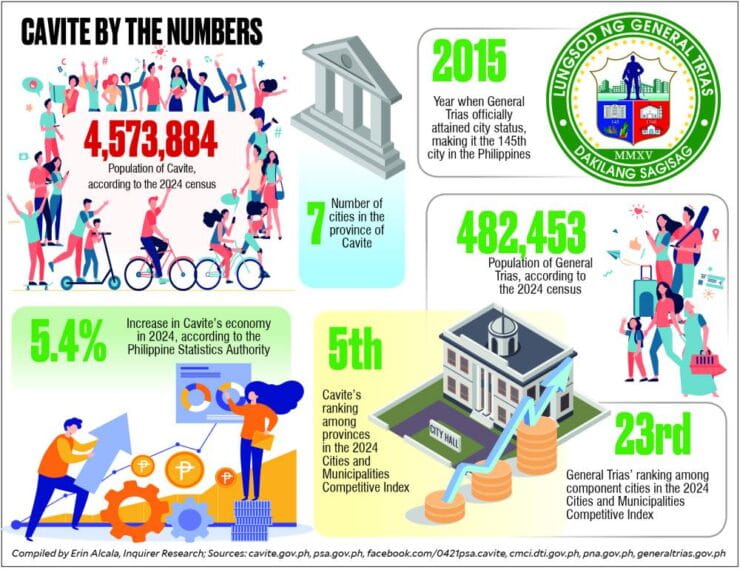
Key driver

General Trias, in northern Cavite, has been a key driver of the province’s urbanization. Covering 8,700 ha across 33 barangays, the city has evolved from an agricultural municipality into a thriving first-class component city and industrial hub.

General Trias is Cavite’s seventh city in 2015 under Republic Act No. 10675. Today, this city hosts major manufacturing, semiconductor, and real estate companies, including the Gateway Business Park and Cavite Economic Zone.

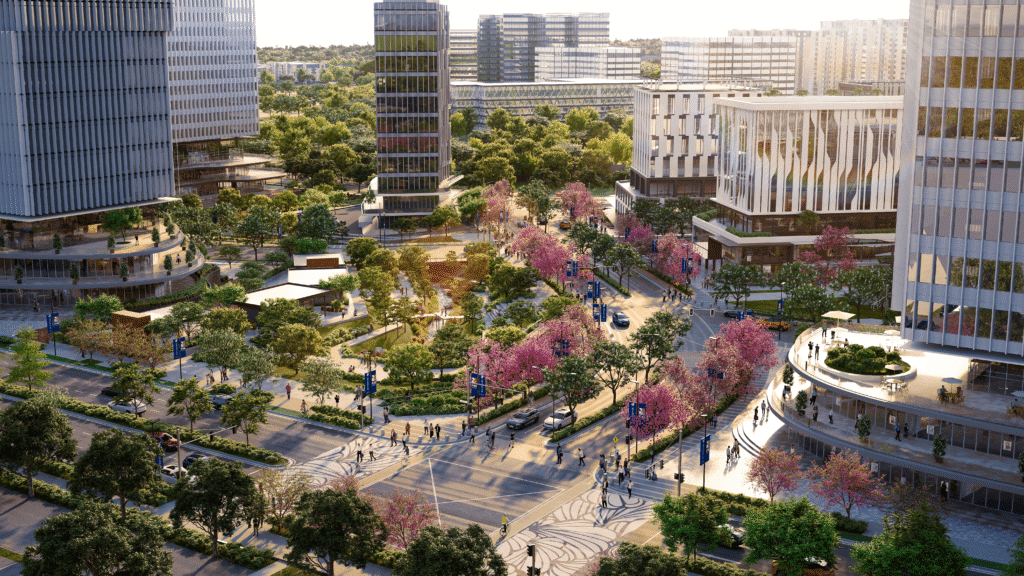
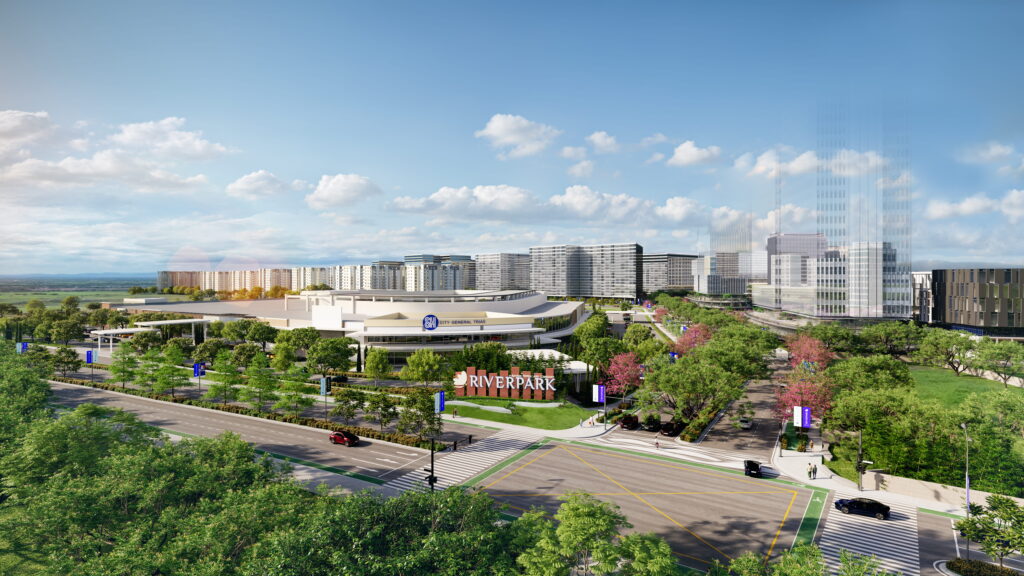
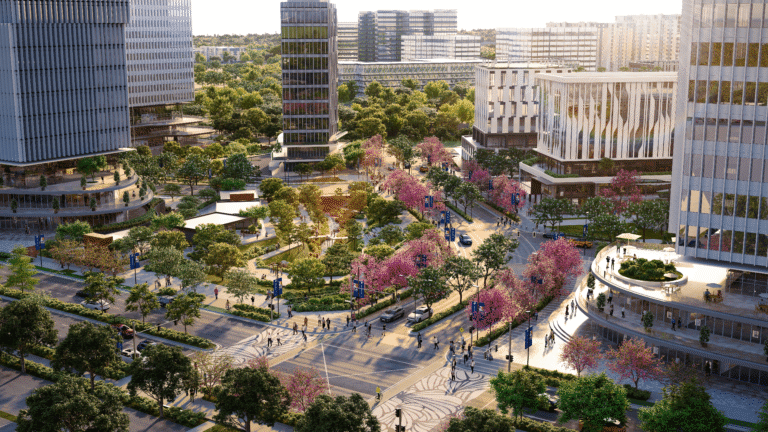
Its property market is booming, anchored by Federal Land’s 600-ha Riverpark township, envisioned as the “Next Gen City of the South,” which blends nature, connectivity, and urban convenience.
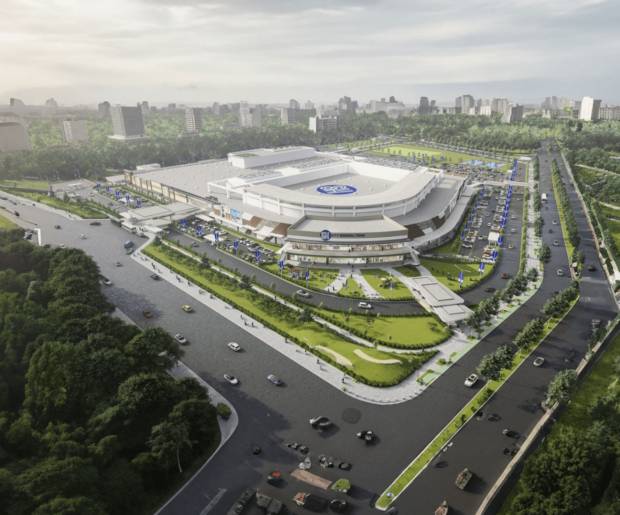
Riverpark is envisioned as the “Next Gen City of the South”. (Inquirer File Photo)

Within Riverpark, Yume, a Japanese-inspired residential development by Federal Land NRE Global Inc., offers modern, community-focused living.

Once a suburban support town, General Trias has now cemented itself as a major property investment destination, shaping the future of Cavite as a dynamic, urbanized province.
General Question
Can a foreigner purchase a condominium unit in the Philippines?

Yes, foreigners are allowed to own condominium units in the Philippines, as stated in Section 5 of Republic Act No. 4726, otherwise known as the Condominium Act.

Yes, on the condition that the parent or legal guardian signs the contract on behalf of the minor. Please contact us for more details.

Yes, you can upgrade your purchase. The Developer will first check if the preferred unit is still available. If it is still available, the Buyer will be required to submit a written request. Once the request is approved, a new contract will be drawn up for the upgraded unit.

Yes. The process to downgrade is similar to that of upgrading a unit purchase. However, all expenses incurred by the Developer (commission, incentives, penalties, downgrading fee, etc.) shall be deducted from the Buyer’s original contract price, in favor of the Developer.

What are the available payment terms?

There are several payment terms available – Cash Term, Bank Financing Term, Deferred Cash/Installment Term, and No Down Payment Term. Please contact us for more details as the availability of these payment terms also vary per project.

Yes, you may change or restructure your selected term, but this will also be subject to Management’s approval and we will be charging a minimal processing fee.

Yes, we accept payment in US dollars. The exchange rate shall be based on the date the payment is credited to the Developer’s account.

On or before the due date of the first (1st) monthly amortization, the Buyer is required to submit Postdated Checks for the remaining monthly amortizations (that is, until the end of the payment term).

The developer adheres to provisions as stipulated in Republic Act No. 6552 or the “Realty Installment Buyer Protection Act,” also known as the Maceda Law. This law states that when the Buyer has paid at least two (2) years of installments, the seller/developer shall refund 50% of the total payments made if there is a cancellation on the purchase. For payments less than two years, the provisions as stipulated in the Contract to Sell will prevail.

What do I need to do to officially reserve a Condominium Unit?

Requirements to officially reserve a unit or lot are as follows:

1. Full payment of the Reservation Fee

2. Photocopy of one (1) valid government-issued IDs of Principal Buyer/s and Spouse/s (if applicable). Valid government-issued IDs with photos and signatures:

  • Passport
  • Driver’s License
  • GSIS ID
  • SSS ID
  • Professional Regulatory Commission ID
  • Tax Identification Number ID card
  • Senior Citizen ID
  • Postal ID
  • Photocopy of TIN ID card or BIR validated 1904 form

3. Fully accomplished and signed Reservation Application

4. Fully accomplished Buyer’s Information Sheet. For purchase under a Corporation, the following additional documents are required:

  • Articles of Incorporation and By-Laws (photocopy)
  • Secretary’s Certificate indicating the name of authorized signatory (notarized)
  • BIR-validated 1903 or copy of Certificate of Registration
  • For the authorized signatory to submit items 2 and 3 above

The reservation is valid for thirty (30) calendar days from the settlement of reservation fee. Kindly submit all the required documents to finalize the unit booking.

No, the reservation fee is non-refundable and non-transferrable. As stated in the Reservation Application, the reservation fee will be forfeited in favor of the Developer if no succeeding payments are received.

Will I be allowed to inspect the Unit before the actual turnover?

Yes, the Hand Over Team will coordinate with the Buyer on the schedule of unit inspection.

Yes, the Buyer may assign a representative to accept the unit on his behalf thru a notarized Special Power of Attorney (SPA). The SPA is also required to bring a valid ID plus photocopy.

Yes, you may have your unit leased out.

Monthly Association Dues vary per project, depending on the operating expenses of the building. Association Dues are used to defray the cost of maintaining and operating the building’s common areas and facilities. These costs include administration/management fees, janitorial, security, taxes and licenses, insurances, real estate tax, maintenance of equipment water distribution, garbage collection, maintenance of sewage treatment plant, and other miscellaneous expenses.

The unit turnover will be scheduled when all the following conditions are met:

  • Full payment of the contract price (including penalties and interests, if applicable)
  • Complete submission of all the required sales documents (listed above)
  • Payment of related Advance Registration Charges (ARC).

No, this is not allowed. Buyers are encouraged to either avail of bank financing (with accredited banks) or in-house financing to pay the unit in its entirety.