
THE PHILIPPINE economy entered 2026 with a jolt. Gross domestic product grew just 3% in the fourth quarter of 2025, pulling full-year growth down to 4.4%. While earlier analyst estimates hoped for a high 4% or even 5% finish, the official numbers show a much sharper deceleration in the final months of the year.
Even the country’s economic managers admitted they were caught off guard by the scale of the slowdown.
“To be honest, I did not expect that this would be this sharp,” Secretary Arsenio M. Balisacan of the Department of Economy, Planning, and Development (DEPDev) said in a press conference, adding that while a deceleration was anticipated, the magnitude of the impact highlighted how sensitive the country’s growth had become to sudden shock.
Much of the decline was attributed to a massive corruption scandal involving P545 billion in anomalous infrastructure projects that stalled public spending and shook consumer and investor confidence.
According to the Philippine Statistics Authority (PSA), the fourth-quarter slowdown was accompanied by a sharp contraction in gross capital formation, reflecting delayed investment decisions. Data showed that investment shrank by 10.9% in the quarter, the sharpest decline since the height of the coronavirus disease 2019 (COVID-19) lockdowns in 2021.
Meanwhile, household consumption grew 3.8%, but slower from 4.1% recorded in the prior quarter. Data shows that spending shifted toward essentials and services such as food, non-alcoholic beverages, and restaurants, while discretionary categories such as furnishings, clothing, alcohol and tobacco contracted. This is in the final three months of the year, the period typically considered the strongest for consumption due to holiday spending, bonuses, and year-end purchases.
The most significant drag on growth came from public construction. Government spending on infrastructure construction plunged in the second half of 2025, as much as 40.1% in October after four straight months of decline following the exposure of misappropriated funds linked to infrastructure and flood-control projects.
Mr. Balisacan noted that the pullback in public spending was deliberate, aimed at preventing “business as usual” while accountability mechanisms were strengthened. “It is better to have a slowdown. Correct the problems, build back the trust of our people in their institutions and in their government.”
But the economic cost was substantial. Mr. Balisacan quantified the impact bluntly during the PSA briefing: had public construction spending merely remained flat, full-year growth would have reached a rou nd 5.5% instead of 4.4%. In the fourth quarter alone, he estimated that the contraction in public construction subtracted about 2.2 percentage points from growth.
Infrastructure spending plays an outsized role in the Philippine economy. It creates jobs, feeds into supply chains, and creates positive investment signals for investors. When it stalls, the effects ripple outward: businesses delay new projects and stall hiring plans, while consumers lose discretionary income and tighten their belts.
A TIME FOR REFLECTION
The central question now is whether the reforms planned for this year will be sufficient to rebuild trust and accountability.
Mr. Balisacan mentioned the following planned reforms: the New Government Procurement Act; the proposed Anti-Dynasty Bill; and amendments to the Party-List System Reform Act, the Bank Deposits Secrecy Law, and the Anti-Money Laundering Act.
The DEPDev Secretary added that they are already working on a report centered on making 2026 the rally point for Philippine economy. The report, to be shared with the public mid-February, aims to revitalize the implementation of the Philippine Development Plan and outline strategies to address governance challenges.
“The reform efforts we have begun and continue to pursue have affected the recent growth performance. They are necessary and critical steps,” he said, emphasizing that accepting weaker growth in the short term is preferable to sustaining higher growth built on compromised governance.
“Growth may be higher in the short term, but with corruption all over the place, that would not be expected to last,” he said. The government ’s response has focused on tightening procurement rules, improving transparency, and aligning budgets more closely with approved development plans.
Beyond governance reforms, the government is re-emphasizing investments in education, health, human capital, and climate adaptation as the foundation for long-term growth, with Mr. Balisacan noting that raising productivity through these fundamentals can lift the economy ’s potential growth rate and make it more resilient to future shocks.
From the perspective of long-term investors, successful growth must be “steady, broad-based, and sustainable,” according to Frederic C. DyBuncio, SM Investments Corp. president and chief executive officer, who says this means stable inflation, continued job creation and investments that increase productive capacity rather than relying on short-term demand.
“From our experience as a long-term investor, this kind of growth is supported by consistent policy signals, timely execution, and an environment that allows businesses to plan and invest with confidence,” he told BusinessWorld in an email. “We also need disciplined capital allocation and sustained investment in productivity, technology, and people so growth translates into higher incomes and competitiveness.”
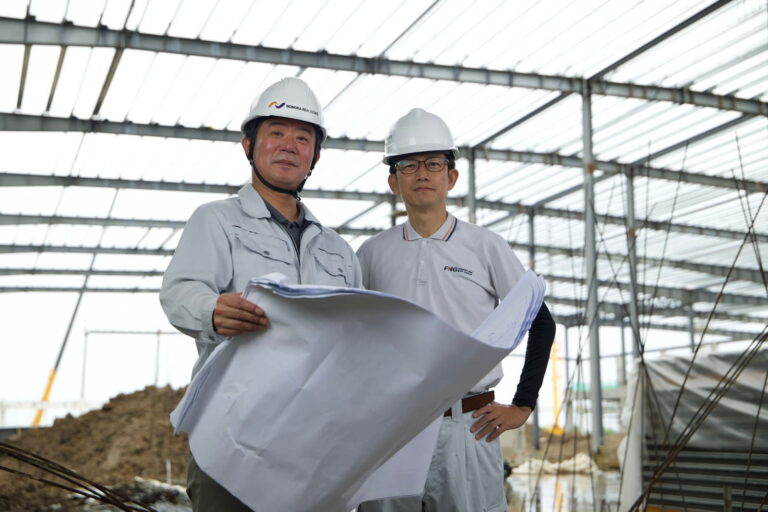
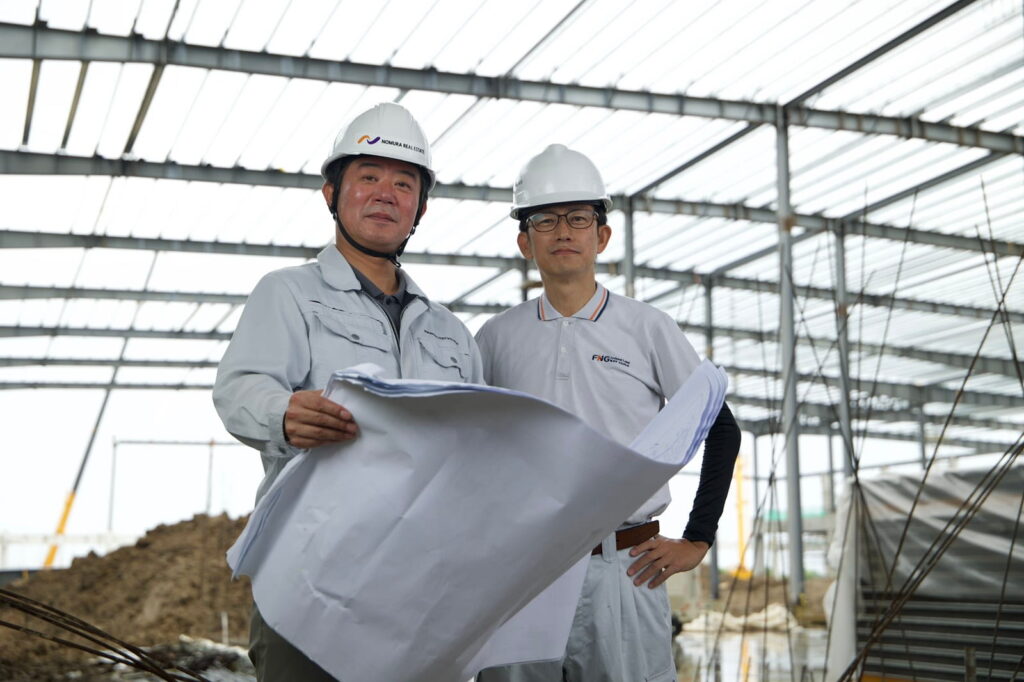
Real estate developer Federal Land NRE Global Inc. (FNG) echoed the sentiment, saying that success in 2026 means more than impressive GDP headline, but restoring confidence at the ground level. “When households feel secure enough to make long-term decisions like buying a home and businesses feel that this is the right time to invest again instead of waiting on the sidelines, that’s when growth becomes meaningful, and success for the country as a whole becomes ensured,” Thomas F. Mirasol, vice-chairman of Federal Land and president of FNG, said in an email.
DEPDev shared that target GDP growth rates for this year and the next are at around 5-6% and 5.5-6.5% respectively. Much of this expectation hinges on the public sector’s ability to make good on their promises of accountability, as firms are now prioritizing projects with clearer timelines and lower exposure to regulatory or operational delays. There is little tolerance for ambiguity in this environment.
“Real estate, in particular, responds strongly to clarity. When people feel they can plan ahead, the broader economy follows. After that point, success becomes all about discipline and execution on our part, to make sure we are positioned to seize the opportunities when and where they arise,” Mr. Mirasol said.
Uncertainty, Mr. DyBuncio added, tends to delay capital decisions in the private sector more than difficult news for diversified corporations with exposure to consumption, finance, and infrastructure. “Consistency and follow-through matter,” he said.
WHAT MATTERS MOST
Restoring trust is but one factor for growth this year, however. External risks remain, even if their impact is indirect. The International Monetary Fund, in its January update to its World Economic Outlook, cited that while global growth is projected to remain resilient, “risks to the outlook remain tilted to the downside.”
The world is quickly reevaluating its expectations around artificial intelligence (AI) and how much their investments into AI companies can actually deliver in return. Such a reassessment could trigger market corrections that spill over from technology firms to broader financial markets, eroding household wealth and confidence. Trade tensions could also resurface, prolonging uncertainty and dampening global economic activity, while renewed geopolitical or domestic political disruptions risk unsettling markets, supply chains, and commodity prices.
Fiscal pressures add another layer of risk. Larger government deficits and elevated public debt in major economies could push long-term interest rates higher, tightening financial conditions worldwide.
For an economy like the Philippines, such external shocks can quickly feed through financial markets and trade channels. In particular, the weaker-than-expected growth print for 2025 has renewed expectations of further monetary easing. With inflation recorded at 1.7% in 2025, the lowest level in nine years and below the government’s 2-4% target band, the Bangko Sentral ng Pilipinas (BSP) has greater room to cut rates without immediately risking price instability.
BSP Governor Eli M. Remolona had previously said the slower growth would factor into the central bank’s decision at its Feb. 19 policy meeting. The BSP has already cut its benchmark rate by a cumulative 200 basis points to a three-year low of 4.5% in the current cycle.
These factors do not necessarily derail growth, but they amplify volatility and complicate policy trade-offs.
Mr. DyBuncio is optimistic. “Recent steps to strengthen oversight, transparency and institutional safeguards are constructive. From an investor’s perspective, what matters most is that governance continues to improve while priority infrastructure and social investments proceed without disruption. Clear rules, strong controls, and consistent execution encourage greater private-sector participation alongside public spending,” he said.
FNG noted that future growth can slow and compound if consumers delay major decisions and companies wait for an environment with clearer signals. But such hesitation can reverse very quickly once confidence in the economy improves.
“In real estate we often see that when people feel more certain about the direction of rates and the economy and their own personal expectations, business activity can pick up faster than most might expect,” Mr. Mirasol said.
If there is to be a defining theme that investors hope to see in 2026, it is execution.
“These reforms protect public funds, strengthen our institutions, build a more resilient, inclusive economy, and ultimately, rebuild trust between government and the people we serve,” Mr. Balisacan had said of the government’s plans.
“With discipline, better governance, and sustained reforms. We are decisively moving to ensure that growth in 2026 and beyond is stronger, more inclusive, more resilient, and truly felt by all Filipinos,” he added.